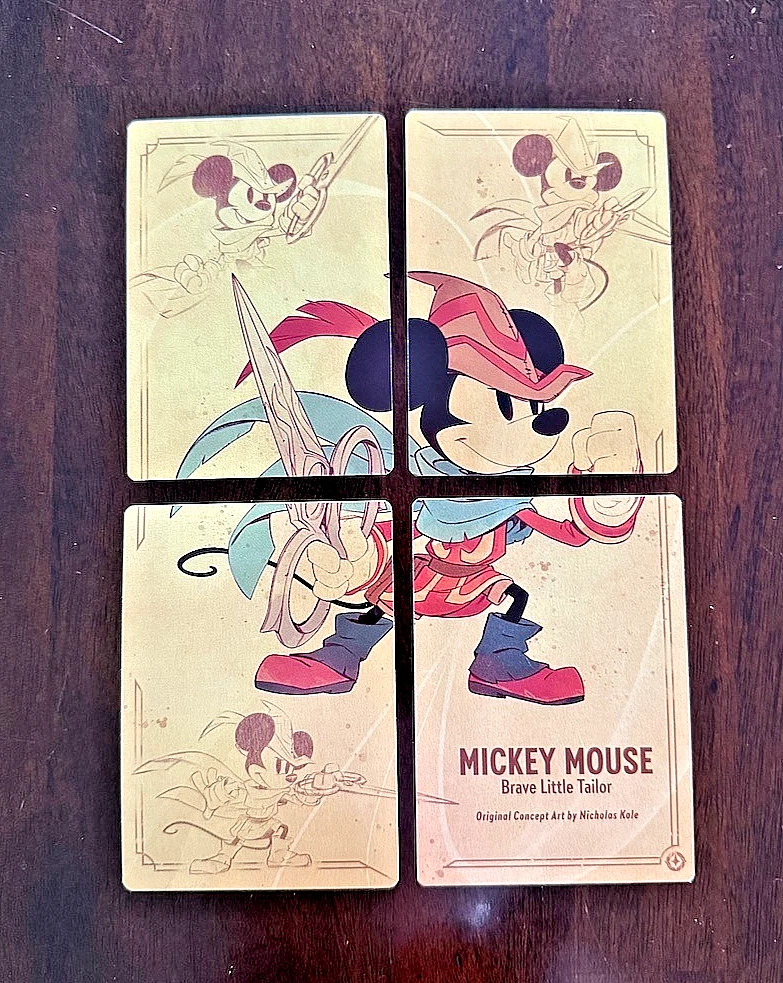
When Disney Lorcana launched in August 2023, the secondary market reacted the way it does with any new IP from a massive brand: with a mixture of genuine enthusiasm and speculative inflation. Enchanted rares from The First Chapter traded at hundreds of dollars on release. Print runs sold out at big-box retailers.
Two years in, the market looks different — more mature, more rational, and in some ways more interesting for buyers who weren’t there at launch.
What happened to launch prices
The initial spike in Lorcana values followed a familiar pattern for new TCG releases. Low initial supply plus high brand interest plus novelty equals elevated prices. Charizard ex from Obsidian Flames, Jeweled Lotus at Commander Masters launch, The One Ring — every major TCG has these moments.
What makes Lorcana worth examining is how it settled. Unlike some TCGs that see dramatic post-launch collapses, Lorcana’s highest-rarity cards found a relatively stable floor. Enchanted rares from The First Chapter — the illustrative highlight cards that function as Lorcana’s equivalent to full-art treatments — have held value significantly better than most observers expected at launch.
The reason is partly structural. Disney’s brand generates a different buyer profile than most TCGs. A meaningful portion of Lorcana’s collector base isn’t primarily a TCG player — they’re Disney collectors for whom these cards represent a new medium for artwork they already love. Maleficent as an Enchanted rare doesn’t just have TCG scarcity value; it has collectible art value to a different audience entirely.
What actually appreciated vs. what didn’t
Held or appreciated: Enchanted rares from the first two sets, particularly characters with long-standing fan followings (Maleficent, Simba, Elsa, Mickey). Cards with unique artwork that doesn’t appear elsewhere in the set. The most playable competitive cards from each set.
Declined from launch highs: Most non-Enchanted rares and uncommons, common competitive staples once reprinted or replaced by newer sets, and cards that were initially priced on speculation about their competitive viability before the meta was established.
The competitive staple pattern is worth noting specifically. Lorcana’s competitive scene has developed more slowly than MTG or Pokémon, which means cards that were priced on “potential format staple” at launch have often corrected down as the actual meta emerged. This is an opportunity for competitive players: many cards that were $20–30 at peak are now $5–10 and seeing play.
The reprint question
One concern among early collectors was Disney’s reprint strategy. Unlike MTG’s Reserved List or Pokémon’s vintage sets, Lorcana has no formal reprint policy for its rarest cards.
So far, Ravensburger has handled this the way most modern TCG publishers do: reprinting functional cards into later sets as new variants while keeping specific printings (especially Enchanted rares) unique to their original sets. The Enchanted Editions product was a deliberate exception — a higher-end product targeting collectors specifically.
Whether this holds over time is genuinely unknown. It’s a risk factor for collector-grade Lorcana cards that’s worth acknowledging honestly.
What to look for now as a buyer
First Chapter Enchanted rares have had two years to find their floor. If you’ve been watching a specific card — a character you love, or a card with strong competitive relevance — the window between “just launched and speculative” and “vintage enough to start climbing again” is typically a good buying opportunity.
Competitive staples from earlier sets are often at or near historic lows. The meta continues to evolve, but cards that have shown up consistently in top-performing lists from Rise of the Floodborn and Into the Inklands are worth targeting now rather than after the next competitive spike.
Ink distribution awareness. Lorcana’s inks (the game’s equivalent to colors) have differing popularity, which affects price floors. Amber and Steel tend to have higher prices for their top cards because those inks are disproportionately represented in competitive meta decks. If you’re buying for collection rather than play, Steel and Amber have more compression risk.
The broader picture
Lorcana is in an interesting position for a two-year-old TCG. It has a stable core player base, a collector audience that behaves differently from traditional TCG collectors, and a publisher that’s shown it understands both groups need different things from the product.
Whether it becomes a long-term collectible market on the level of Pokémon vintage is a 10-year question, not a 2-year one. What’s clear now is that the speculative froth of launch has settled, and the cards that were always going to matter — iconic Disney characters in stunning artwork — are holding their value for reasons that make intuitive sense.
For buyers who love the game, love the IP, or both: the current market is more rational than it was at launch, and the best cards from the first two sets are arguably at fairer prices than they’ve been since release.
We carry Disney Lorcana singles from The First Chapter through current sets. Browse Lorcana inventory or contact us if you’re looking for something specific.